Concrete Surfaces Without Embedded Stains
Driveway & Concrete Cleaning in Bloomingdale for oil stains, tire marks, and discoloration that pressure rinsing alone won't remove
Oil stains penetrate concrete pores within hours of contact, bonding with the aggregate and creating dark patches that resist casual cleaning. High-pressure surface cleaning lifts embedded grime by combining concentrated water flow with surface cleaners that cover wider paths than wand-type nozzles, preventing the streaking that occurs when overlapping passes don't align. TDM Properties uses this method on driveways, sidewalks, and curbs in Bloomingdale, where vehicle fluids, rust from lawn equipment, and organic tannins from leaf litter create layered staining that builds up over multiple seasons.
The process begins with pre-treatment of oil stains using degreasers that break down petroleum bonds, followed by high-pressure cleaning that forces the loosened material out of the concrete's porous structure. Surface cleaners use rotating nozzles housed within a shroud, which contains overspray and maintains consistent distance from the concrete, producing even results without the wand marks that come from handheld pressure washing. This approach also prepares concrete for sealing by opening the surface and removing contaminants that would prevent sealer adhesion.
Request a detailed estimate based on your driveway's current staining and surface condition.
What You Notice Once Concrete Is Cleaned
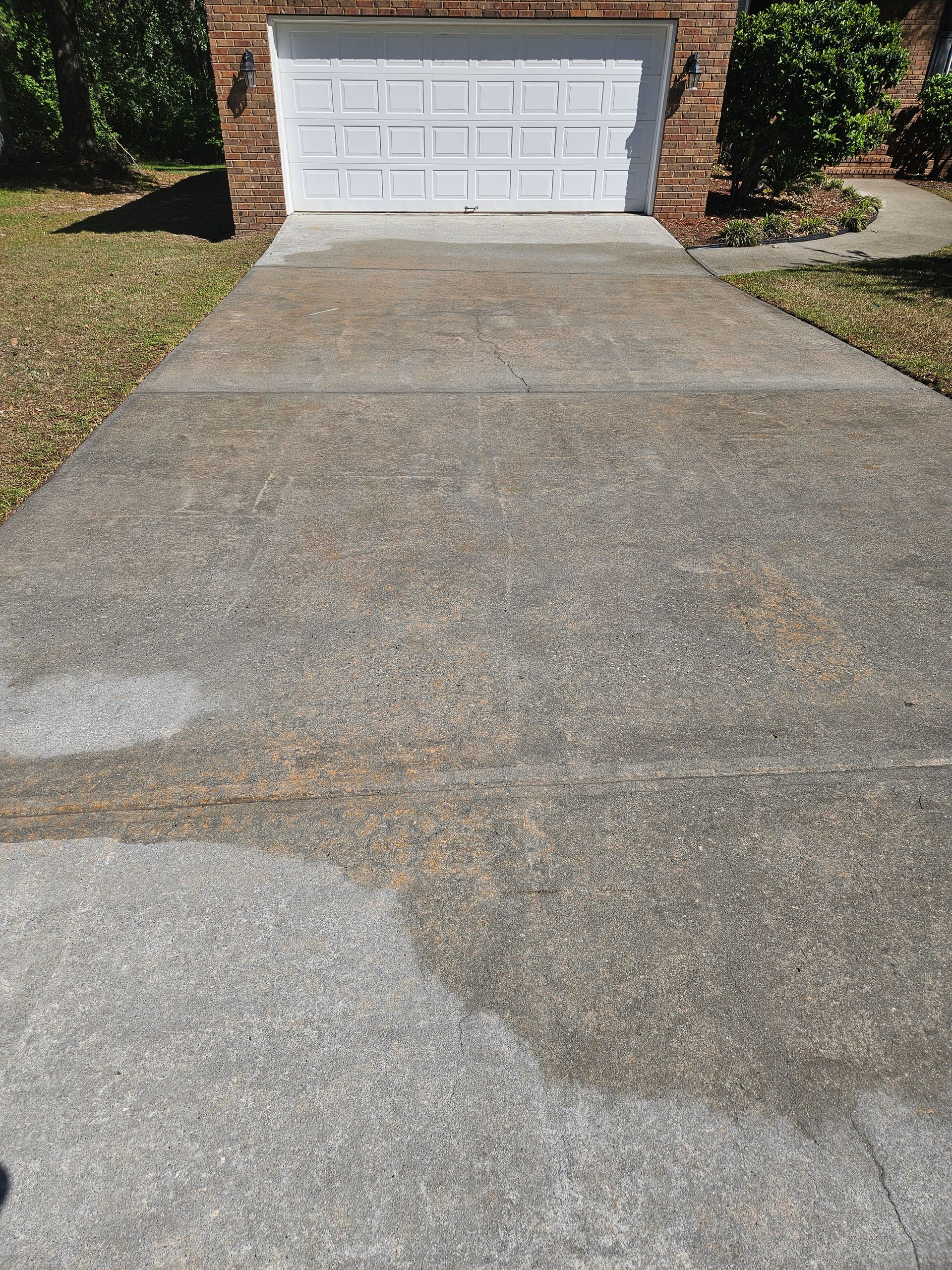
Driveways and walkways return to a uniform light gray after cleaning removes the darkened layer of ground-in dirt, tire residue, and organic matter. Oil stains that appeared permanent lighten significantly or disappear entirely when degreasing agents penetrate before pressure application. Rust marks from metal furniture or lawn tools lift away, and the concrete's original texture becomes visible again where algae or mildew had created slick patches.
Curbs and sidewalk edges look defined again once soil splash and grass clippings are cleared from joints and expansion gaps. If you're planning to seal the concrete, cleaned surfaces accept sealer evenly because contaminants no longer block penetration. The color difference between cleaned and untreated sections is immediate and distinct, showing just how much discoloration accumulates even on surfaces exposed to rain.
Concrete cleaning doesn't repair cracks or spalling, but it does reveal the true condition of the surface by removing coverings of dirt that can hide structural issues. Once clean, you'll know whether repairs or sealing are necessary, and you'll have a baseline appearance that makes future maintenance easier to gauge. High-traffic areas like aprons and turnaround zones show the most dramatic improvement because they accumulate the densest concentration of tire marks and fluid drips.
Common Questions About This Service
Property owners typically want to know how cleaning affects older concrete, what stains respond best, and whether the results justify the cost compared to replacement.
What stains are hardest to remove from concrete?
Set-in rust and old oil stains that have oxidized for years may lighten but not disappear completely, especially if they've etched into the surface. Fresh stains respond much better because they haven't had time to chemically bond with the concrete's lime content.
How does high-pressure cleaning prepare concrete for sealing?
Cleaning opens the concrete's pores by removing dirt, oils, and previous sealer residues that would otherwise prevent new sealer from penetrating. Sealed concrete applied over contaminated surfaces often peels or bubbles within months because the bond never formed properly.
Will pressure cleaning damage older or weaker concrete?
Surface cleaners distribute pressure more evenly than wands, reducing the risk of gouging, but severely weathered concrete with loose aggregate or deep spalling can deteriorate further under any cleaning method. A visual inspection helps determine whether cleaning is advisable or if the surface needs repair first.
How long does cleaned concrete stay looking fresh in Bloomingdale?
Without sealing, most driveways begin showing new stains and organic growth within six to twelve months, depending on shade and vehicle use. Sealing after cleaning extends the clean appearance significantly because liquids bead up rather than soaking in.
Can tire marks and rust be completely removed?
Tire marks usually lift entirely with proper pressure and dwell time for cleaning agents, while rust removal depends on how deeply the oxidation has penetrated. Surface rust responds well, but rust that has reacted with the concrete's iron content may leave faint traces even after aggressive treatment.
TDM Properties restores driveways, sidewalks, and concrete surfaces across Bloomingdale where staining and buildup have diminished appearance and function. Contact us to review your concrete's condition and determine the appropriate cleaning approach for your property.